
On 22 August 2025, in the early hours of the morning, a section of the Jianzha Yellow River Bridge — part of the Xining–Chengdu high-speed railway project — collapsed during tensioning operations. Thirteen workers lost their lives. Three remain missing. Direct economic losses reached approximately ¥48.86 million (USD 6.7 million).
We extend our deepest condolences to the families of those lost.
The official investigation report, published in April 2026, concluded that this was a major liability accident. The cause was not a design failure or an act of nature. It was something far more preventable.
What the Investigation Found
Non-compliant fasteners. Substandard bolts were procured and installed in critical load-bearing positions of the temporary cable tower — in direct violation of specifications.
Substandard fabrication. The distribution beam was manufactured and installed below the required quality standard.
Inspections that existed only on paper. On-site acceptance checks were carried out as a formality. No one caught the defects before tensioning began.
Three separate failures. Any one of them, caught in time, could have prevented the collapse entirely.
The Pattern Is Not Unique to This Project
In nineteen years of on-site engineering work across the Pearl River Delta, I have seen this pattern repeat — not at the scale of a bridge collapse, but in factories, fit-out projects, and MEP installations that international buyers trusted without verification.
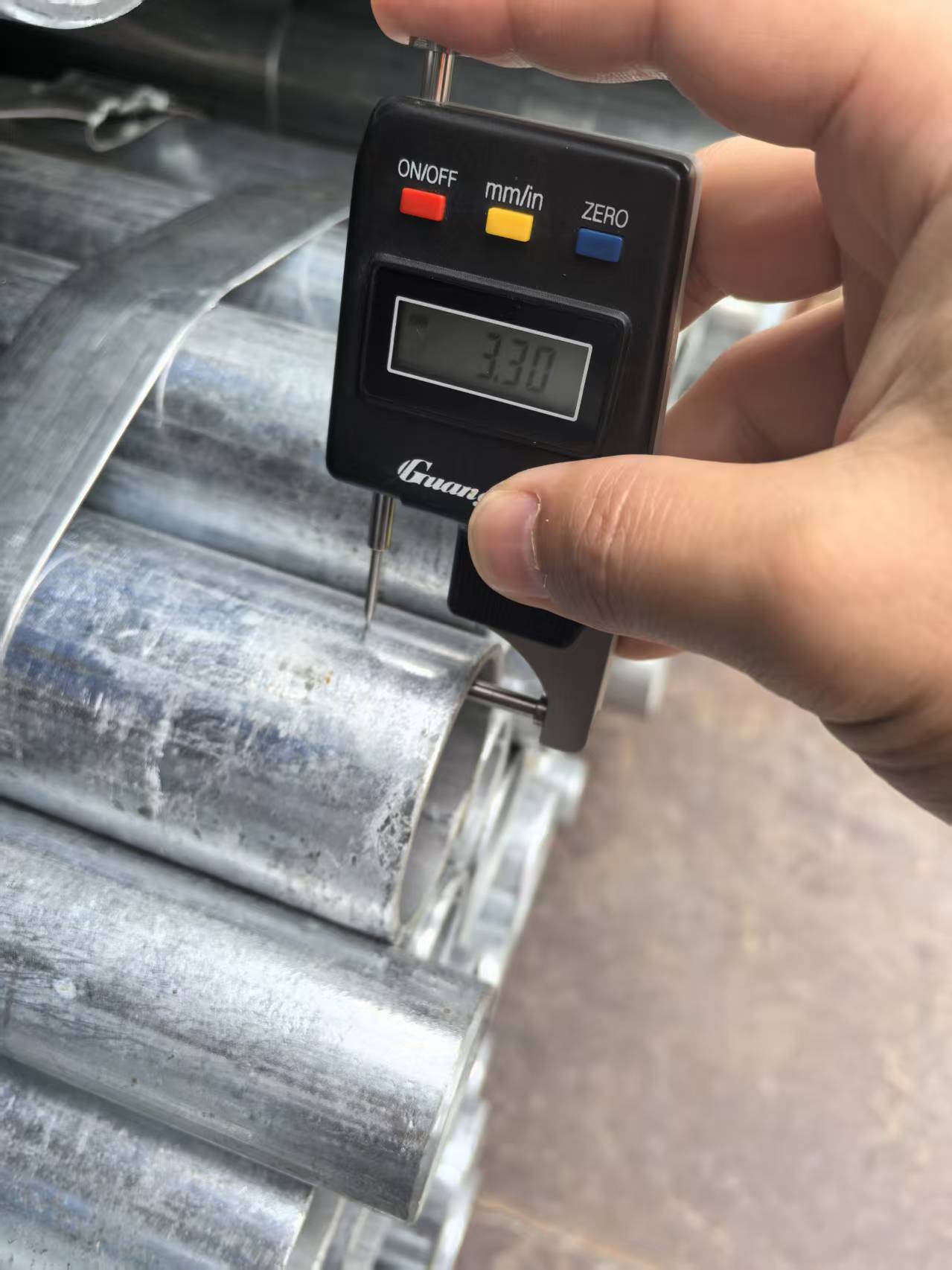
A bolt that doesn't meet spec. A wall thickness that's 0.3mm short. A weld that looks clean from a metre away. These details don't announce themselves. They wait.
The Jianzha bridge investigation used a phrase that should concern every international buyer sourcing from China: inspections carried out as a formality. That is precisely the gap that independent technical oversight is designed to close.
What Independent Oversight Actually Means
Verification at the source. Before materials leave the factory, before they are installed on site — a qualified engineer physically measures, tests, and documents compliance against specification. Not a checklist. Not a rubber stamp.
Technical depth, not surface observation. CN Quality Check inspections are led by a Registered Supervision Engineer (注册监理工程师) with 19 years of MEP and construction experience. We don't just look — we know what to look for, and we know what failure looks like before it happens.
A record that protects you. Every inspection produces a bilingual (English/Chinese) technical report with photographs, measurements, and clear pass/fail findings. If a dispute arises, you have documentation. If a supplier pushes back, you have evidence.
The Arithmetic of Prevention
The cost of an independent inspection is a fraction of one percent of most project values. The cost of discovering non-compliant materials after installation — or worse, after failure — is measured in a completely different currency.
The Jianzha bridge investigation has been published. The lessons are available to anyone willing to read them. The question for international buyers procuring from China is straightforward: who is your qualified engineer on the ground?
Need an independent inspection in China?
Request a Quote →